INVENTING DANCE: IN AND AROUND JUDSON
New York, 1959-1970
MAMAC October 12, 2018 - February 17, 2019
Du 12 October 2018 to February 17, 2019, the city of Nice invites you to discover the exhibition Inventing Dance: In and Around Judson, NYC, 1959-1970 to the contemporary gallery of the MAMAC. The vernissage will be held Thursday, October 11, 2018 at 7 pm.
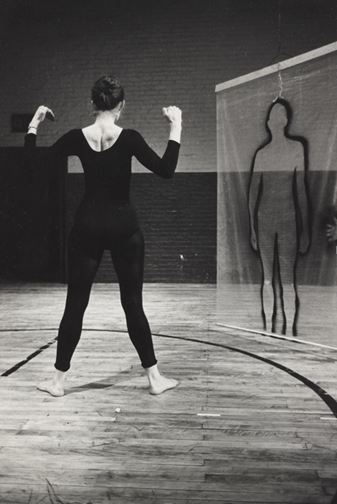
Al Giese, English of Steve Paxton photo, dancer Trisha Brown, 1963 to Mary Hottelet / Licensed by VAGA and Artists Rights Society (ARS), New York. Courtesy Fales Library, New York.
Steve [Paxton] invented the market and I invented the race.
-Yvonne Rainer
The Judson Memorial Church (Washington Square in New York), became a center of creation of artistic experimentation of foreground in the 1960s by welcoming the research, performance and facilities of many artists of the New York scene combining art, music, poetry, theatre and dance. Thus, in 1959, the Judson Gallery was founded, offering workshops and spaces for exhibitions, happenings and performance artists like Jim Dine, Allan Kaprow, Claes Oldenburg, Allison Knowles, Tom Wesselmann gold still Daniel Spoerri. In 1962, the pastor protesting Al Carmines, offers the sanctuary of the Church to a group of dancers - Trisha Brown, Lucinda Childs, Ruth Emerson, Deborah Hay, Steve Paxton, Yvonne Rainer, Elaine Summers and many others-in order to present their report from workshop a choreography course taught by the composer Robert Dunn. From this date the collective, who will call the Judson Dance Theater, will introduce new methodologies for composition and dance practice that even today the cornerstone of minimal art, are recognized in the multidisciplinarity and the art of performance.
Some students of the course of Dunn, as Simone Forti, use the influences of the dancer-choreographer Anna Halprin, who in 1954 anime in Kentfield, California, anime an outdoor Studio on his Dance Deck. Rather than teaching them a special technique, she favors improvisation and the development of the perception of the movements of different parts of the body through simple "tasks" as crawl or sit. She also teaches them to imitate the nature that surrounds them. In summer 1960, Forti invites artists like Rainer and Robert Morris to follow Halprin workshop where they face the compositions and the readings of La Monte Young. However, the main actors of the Judson Dance Theater are class of Dunn, who are taught in the Merce Cunningham studio, emblematic figure of modern dance. He then teaches them methods of chance, of experimentation based on indeterminacy (according to John Cage) and the practice of writing, graphic or textual, as prior concept in choreography.
On July 6, 1962, after two years of classes, the Judson dancers present in the sanctuary of the Church the "Concert of Dance # 1", which will be the first of a series of sixteen during the next two years. Joined by composers, filmmakers, visual artists and poets, the group rejects modern dance codes dictated by Cunningham and Martha Graham works. This multidisciplinary laboratory, they had put on foot during their weekly "workshops", opens the door to experimentation based on such issues as the elimination of the story in dance, the analysis of the relationship of the body with time. space and the public, but also the development of the daily gestures. The end of 1963, some the Judson dancers begin to stage their own concerts, developing distinct group styles and methods.
As early as 1966 Judson space reopens its doors under the direction of Jon Hendricks, artist, activist and co-founder of the guerrilla Art Action Group and asserts itself as the crossroads of artistic experimentation and multidisciplinary collaboration. In 1968, he organized the exhibition 12 Evenings of Manipulations, Jud Yalkut documents in an experimental video. The film Fragments Judson (1964) Elaine Summers takes up sequences of concerts of the Judson Dance Theater, mixed randomly with other images including those of James Waring choreographer teaching a course. Hendricks continued to invite local and international artists including Bernar Venet, making a series of performances including Relativity's Track in 1968. The highlight of cultural activism of the site is The People's Flag Show exhibition (1970), organized by Jon Hendricks, Faith Ringgold, Jean Toche, all three arrested for 'desecration of the flag. The exhibition becomes a milestone in the campaigns of the artists for the promotion of freedom of expression, at a time where the opposition to the Viet Nam war, like anti-colonial, anti-racist, feminist activism, and for the defense of Gay, continues to rise.
Inventing Dance: In and Around Judson Church, New York 1959-1970 leans heavily on the works of the most emblematic figures of the Judson Dance Theater, but it also highlights the many other personalities who produced or to the works presented in the Church during this long decade. Exposure suggests a plunge into this "Judson" which remains, even today, a source of major influence on choreographers, dancers and artists. Through documents, films and archival photographs, she tries to account for the history of the body in movement in Judson and answer the unresolved question: how to present today a work largely based on improvisation?
Allen Hughes, criticism of dance at the New York Times, concluded its analysis of the "Concert of Dance #1" as follows: "However, it is likely that their experiments influence in one way or another the development of dance in this." countries, and as this assumption is likely, they are worth to be observed. "Looking back 60 years, we realize that admiration mixed with mixed misunderstanding which is reflected in the sentence of Hughes points out the radical 'novelty' and the complex nature of the work produced during this period, in addition to highlight the considerable influence of the experimentations of the dancers. After all, if we believe that word of mind repeated endlessly by Rainer, even walking and race have been changed at all never.
Office : Olivier beard and Andreas Petrossiants

 Stay
Stay Visit
Visit Go out
 Shops
Shops Leisures
 Services